
Kenmore Suburb Guide
Settled, leafy, and properly self-sufficient
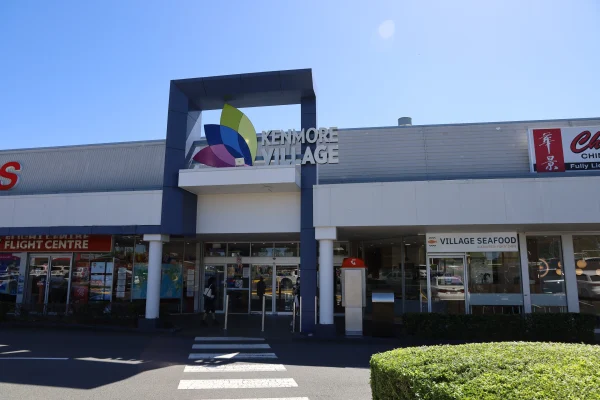
This Kenmore suburb guide covers a riverside suburb built up through the 1960s and 70s, where established streets, real bushland, and a genuine town centre mean most of everyday life happens without ever needing to leave.
About Kenmore
Kenmore sits on a bend of the Brisbane River about 13.6 kilometres south-west of the CBD, its rolling hills and heavy tree cover giving it a genuinely green, leafy character rather than the flat suburban grid you’ll find closer to the city. It borders Brookfield, Kenmore Hills, Chapel Hill, Pullenvale, Jindalee, Pinjarra Hills, and Fig Tree Pocket, putting it firmly in the heart of Brisbane’s western suburbs rather than on their fringe.
The suburb takes its name from Kenmore Park, a property established in the early 1880s by Andrew Todd, who is believed to have named it after Kenmore in Perthshire, Scotland, a homestead and farming area that supplied Brisbane with timber, dairy, and market-garden produce well into the 20th century. Residential development didn’t take off until the 1960s, when the area was subdivided for housing and quickly earned a reputation as one of Brisbane’s status suburbs, a reputation reflected today in the number of substantial architect-built homes from that era still standing alongside newer development.
At the 2021 census, Kenmore was home to 9,675 people, with a median age of 40, squarely a family suburb rather than a share-house or retiree enclave. Just under two-thirds (65.2%) of residents were born in Australia, with England, South Africa, China, New Zealand, and India the next most common countries of birth, and 79.1% speaking only English at home.
It’s a suburb built around a genuine sense of settled community rather than passing-through convenience, for what that looks like in practice, from schools through to parks, transport, and local business, read on. It’s this mix of settled infrastructure and river frontage that makes living in Kenmore feel different from suburbs further out.
That’s also usually the first thing people weigh up when they’re considering moving to Kenmore Brisbane against other western suburbs.
Kenmore Schools & Catchment Zones
Kenmore families have four real options to weigh: three state schools and one long-established Catholic primary school, and the suburb’s high school has a genuinely distinctive academic identity worth knowing about before you move.
Kenmore State High School
Founded in 1972 and set on Moggill Creek, Kenmore State High School (Years 7–12) has grown to around 2,000 students against a gazetted capacity of 2,231 and operates under an equidistant-catchment Enrolment Management Plan, in-catchment students are guaranteed a place, out-of-catchment applicants go on a waitlist.
What sets it apart is a genuine choice of four Programs of Excellence, each with its own selective entry process:
- German Immersion (GIEP) — running since 1992, with core subjects including Maths, Science, and History taught in German across Years 7–10. In 2009, Kenmore became the first school in Australia to become a partner school of the international PASCH network, and it’s held a sister-school partnership with the Engelsburg Gymnasium in Kassel since 1994, including a Year 10 student exchange to Germany.
- Ken-X — a 3-year program (Years 7–9) built around using technology to solve real community problems.
- Music Extension (MEX) — a 2-year program for students who already read and perform music well, extending their practical and theory skills.
- Zenith — a selective academic program requiring an ACER aptitude test for entry, built around the Future Problem-Solving Competition, with past Kenmore teams progressing to national competition.
Primary schools
Kenmore State School, at 2052 Moggill Road, sits right beside Kenmore Village Shopping Centre, an urban, commercial-strip setting for school drop-off. Kenmore South State School, at 16 Kersley Road, is a different proposition altogether: established in 1967 on a 4.5-hectare bush block toward the Chapel Hill/Kenmore Hills border, with a capacity of 682 students (Prep intake capped at 75 across 3 classrooms), a smaller, leafier setting than its Moggill Road counterpart. Both operate under their own EMPs and run a Parents & Citizens-operated Outside School Hours Care service.
A non-state option
Families weighing a non-state option have Our Lady of the Rosary, a Catholic primary school (Prep–Year 6) on Kenmore Road that’s served the local community since 1963, with around 467 students and facilities including a pool, oval, tennis courts, and a performing arts centre.
Because all three state schools manage enrolment through an EMP, proximity to a school is not the same as a guaranteed place, see Useful Links below for how to check your specific address.
For most families, school choice is the first thing that shapes a decision about living in Kenmore.
Kenmore Parks & Outdoor Spaces
Kenmore is genuinely well provided for when it comes to green space, with local parks spread right through the suburb rather than clustered in one spot. Between them, they cover a real range: playgrounds, BBQ areas, sports ovals, dog off-leash zones, walking tracks, and outdoor fitness equipment. Kingfisher Park on Gem Road is one of the better-equipped, with BBQ facilities, a playground, a sports oval, toilets, and accessible facilities all in one place; Akuna Street Park pairs a playground and BBQ facilities with fitness equipment under a large, established tree canopy. For a quieter walk, Wallawa Street Park is a bushland walking track rather than a conventional park.
Local Businesses & Dining
Day-to-day convenience is one of the more underrated parts of living in Kenmore, most errands don’t require leaving the suburb at all.
Kenmore’s everyday life runs through two hubs. Kenmore Village, at the Brookfield Road/Moggill Road roundabout, is the suburb’s original heart, anchored by Coles, with the local library and a post office built in. A short drive along Moggill Road, Kenmore Plaza covers the rest: Woolworths, Aldi, First Choice Liquor, a tavern, and a second post office. Between the two, most of what a household needs day-to-day is covered without leaving the suburb.
Cafes & dining
There are more than 45 cafes, restaurants, and casual dining spots in and around Kenmore, enough that “what’s for dinner” rarely means driving somewhere else. The mix runs from Indian, Mandarin, and Japanese through to bakeries, coffee-first cafes, and the kind of pub that’s been a genuine local landmark for years. A few worth knowing by name: Method to the Madness for coffee, Spicy Affair for Indian, Sichuan Bang Bang for Mandarin, Sushi Edo for conveyor-belt Japanese, and Good Grace Cafe & Restaurant for an all-rounder. The Kenmore, the suburb’s long-standing pub, is as much a meeting point as a place to eat.
GPs & medical
Healthcare access in Kenmore is genuinely strong for a suburb this size, more than 35 GPs and medical clinics operate in and around the area, clustered mainly along Moggill Road. Marshall Lane Medical Centre, Kenmore Clinics, Kenmore Family Medical Practice, Australian Doctors Clinic, and Berkeley Medical Centre are among the longer-established options, alongside dental, pathology, and allied health services.
That kind of everyday medical access is part of what makes living in Kenmore straightforward for families, rather than something you have to drive out for.
Gyms & fitness
A smaller but solid spread of options covers most training styles: Studio Pilates International, Snap Fitness 24/7, UBX Kenmore, and Jetts Kenmore between them cover pilates, 24-hour gym access, and group functional training.
Pharmacies
Five pharmacies serve the suburb: Blooms The Chemist, Kenmore Central Chempro Chemist, Medicines 4 Less Pharmacy, Discount Drug Store (inside Kenmore Village), and Kenmore Chempro Chemist.
Browse the full, growing list of Kenmore businesses in our Business Directory.
Transport
Transport is the one trade-off worth understanding clearly before moving to Kenmore Brisbane.
Kenmore has no train station, the nearest rail options are Indooroopilly and Chelmer, so getting to and from the suburb means either driving or relying on the bus network, and Moggill Road is the spine that carries almost all of it.
Regular TransLink services connecting Kenmore to the city include the 444 (Moggill–City Express), 446 (Kenmore–City Rocket), 443 (Moggill–City Rocket), 433 (Kenmore South–City), and 435 (Brookfield–City Express), plus several others running via Toowong and Indooroopilly, the corridor supports more than 3,500 bus services a week in total. For drivers who’d rather park and switch to the bus for the rest of the trip, there’s a dedicated Kenmore Park ‘n’ Ride facility directly on Moggill Road. Kenmore State High School is also served by dedicated school-special bus services in addition to the regular public routes, for current route numbers and times, use TransLink’s School Transport Info Centre rather than relying on a number that may have changed.
The suburb’s biggest recent infrastructure change sits just over the border in Indooroopilly: the old Moggill Road/Coonan Street roundabout, one of Brisbane’s busiest suburban intersections at around 55,000 vehicles a day, and the site of more than 40 crashes between 2013 and 2020, was replaced with a new overpass, completed in May 2025. A year on, travel times across that section of the corridor have improved by around 20%, which matters directly for anyone commuting from Kenmore into the city.
Because Moggill Road is still the only real corridor in and out of the suburb, peak-hour congestion remains a recurring pattern day to day, even with the overpass easing the worst of it. For live departures, journey planning, and fares, use TransLink’s Journey Planner (see Useful Links below).
Community & Lifestyle
Kenmore’s community life centres on a handful of long-running local institutions rather than a single town square, the kind of suburb where sports clubs and volunteer groups do a lot of the social glue-work.
It’s this kind of long-running local institution that gives living in Kenmore its settled, familiar feel.
Sport
Akuna Oval is the suburb’s main community sports ground, hosting soccer, AFL, and rugby, along with walking tracks used well beyond match days. Kingfisher Park on Gem Road is a second significant sporting venue, home to local soccer competition. Rugby has particularly deep roots here: Kenmore Centenary Rugby Club (the “Kenmore Bears”) was founded in 1965 and today runs around 35 junior teams and 500+ players from Under 6 to Under 18, including a running tradition of sending Under 12 teams on tour to New Zealand each year. Kenmore’s junior soccer club merged with the University of Queensland Football Club in 2012, which now fields teams at Cubberla Creek Reserve in Kenmore alongside its St Lucia campus grounds. Kenmore has also produced AFL talent, the Kenmore Australian Football Club (the “Kenmore Bears,” founded 1997) started out at Akuna Oval and now plays home games at Main Oval, Chelmer, with juniors from the club going on to AFL careers including Mal Michael and Courtenay Dempsey.
That depth of sporting history is one of the quieter reasons people who’ve spent years living in Kenmore tend to stay put.
Community groups
The Kenmore branch of the Queensland Country Women’s Association meets at Kenmore Library, inside Kenmore Village. The Kenmore and District Historical Society researches and preserves the area’s local history. A Scout Hall in the suburb also supports youth scouting groups.
Landmarks
The Shire of Moggill War Memorial, honouring local soldiers, dates to the 1920s and now stands in Pike Place after being relocated more than once due to nearby roadworks. Mosquito Island, a small undeveloped island in the Brisbane River at the suburb’s southern edge, is a quiet, distinctive local landmark rather than a visited attraction, it’s no longer separated from the mainland by water.
What’s On in Kenmore This Month
Kenmore has a steady mix of free community activity running through two channels: Brisbane City Council’s Active Parks program (fitness and wellbeing sessions held in local parks) and Kenmore Library’s own events calendar (storytime and toddler sessions, author talks, tech help, craft workshops, and more). What’s actually on varies week to week, so the best way to see what’s currently running is the live listing below.
Moving to Kenmore? A Few More Things Worth Knowing
Is it safe?
Kenmore’s reputation as a settled family suburb (see About Kenmore) reflects how most residents experience it, but for actual data rather than general reputation, Queensland Police’s Online Crime Map lets you search crime statistics by suburb directly, updated daily.
Is it bushfire-prone?
Kenmore’s leafy, hillside character means parts of the suburb sit within a mapped bushfire prone area. Queensland Fire Department’s Postcode Checker tool lets you search your specific address to see the bushfire potential for that location, rather than relying on a general suburb-wide assumption.
Is it pet-friendly?
Yes, Kenmore has multiple dedicated dog off-leash parks (see Parks & Outdoor Spaces), plus the walking tracks and green space to go with them.
Can teenagers get around without a lift?
Reasonably well. Several bus routes run from Kenmore via Toowong and Indooroopilly toward the city (see Transport), so a teenager can realistically get to Indooroopilly Shopping Centre or into the CBD without needing a parent to drive every time.
Is there a petrol station?
Yes, a BP on Moggill Road, within the suburb itself.
FAQ
The questions below are the ones people actually ask when they’re thinking about moving to Kenmore Brisbane.
Is Kenmore a good place to live?
For a lot of people, yes. It’s a settled, established suburb rather than a new estate, most of the housing dates from the 1960s–80s development boom, it’s genuinely leafy and river-adjacent, and it’s self-sufficient for everyday shopping with two full shopping centres. Schools are a real drawcard, particularly Kenmore State High’s academic programs. The trade-off is transport: there’s no train station, so getting around means bus or car (see below for what that’s actually like).
What suburbs are in the Kenmore State High School catchment?
There isn’t a simple suburb list, Kenmore State High’s catchment is drawn street by street under its Enrolment Management Plan, not by suburb boundary, so a property a few streets apart can fall on different sides of the line. Check your specific address on the Queensland Government’s EdMap tool rather than assuming based on suburb name.
Can my child attend Kenmore State High School if we live outside the catchment?
Possibly, but it’s not guaranteed. In-catchment students are guaranteed a place; out-of-catchment applicants go on a waitlist, and places are limited by the school’s enrolment cap. It’s worth checking your address on EdMap first and going in with realistic expectations rather than assuming a place will be available.
Does Kenmore have a train station?
No, Kenmore has no rail line. The nearest train stations are Indooroopilly and Chelmer. Getting around without a car means relying on TransLink’s bus network along Moggill Road.
What’s the commute to Brisbane’s CBD like from Kenmore?
It’s bus or car, there’s no train option. Regular bus services run via Toowong and Indooroopilly into the city. Moggill Road is the only real corridor in and out of the suburb, so peak-hour congestion is a recurring pattern worth factoring into a commute decision. For current travel times, use TransLink’s Journey Planner rather than relying on a fixed estimate, since traffic and timetables both vary.
Are there flood risks in Kenmore?
Most of Kenmore sits on higher, undulating ground and isn’t flood-affected, but lower-lying pockets near the Brisbane River and local creeks do carry flood risk. Rather than relying on a general suburb-wide answer, Brisbane City Council’s FloodWise Property Report tool gives you flood information for your specific lot before you buy or rent.
Is the information in this Kenmore suburb guide up to date?
Yes — this Kenmore suburb guide is reviewed and updated when significant local changes happen, like a new school program, shopping centre change, or transport update.
More From This Kenmore Suburb Guide
Whether you’re just starting to research moving to Kenmore Brisbane or already live here, these are the direct links worth bookmarking.
Checking your specific situation:
- School catchments — Queensland Government EdMap
- Public transport times & fares — TransLink Journey Planner
- Bushfire risk — Queensland Fire Department Postcode Checker
- Flood risk — Brisbane City Council Flood Map
- Crime statistics — Queensland Police Online Crime Map